


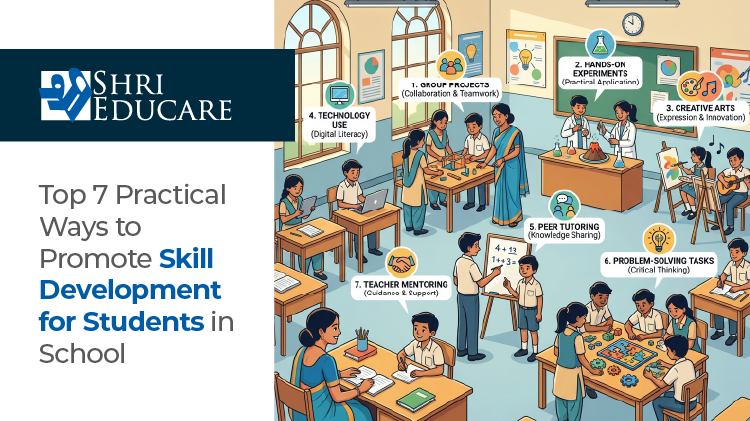
Skill Development for Students is an important part of modern education. Academic knowledge alone is not enough for students today. They also need practical abilities that help them think, act and grow with confidence. Schools play a major role in shaping these abilities from an early age. When schools focus on skill based learning, students become more prepared for real life situations.
Skill Development for Students helps children learn how to communicate clearly, work with others and solve daily problems. These skills support personal growth and future career success. Schools must include simple and planned methods to build skills along with regular classroom teaching.
7 Effective Ways Schools Can Improve Student Skill Development
1. Focus on Practical Learning Methods
Practical learning allows students to understand lessons better. It helps them see how knowledge is used in real life. When students take part in activities they remember concepts for a longer time. This method improves attention and interest in learning.
Examples of practical learning include science experiments, maths activities using real objects and group based tasks. Teachers should explain lessons using daily life examples. This supports Skill Development for Students by improving thinking skills and encouraging curiosity.
Practical learning also helps students become confident. They learn by doing, not just by listening.
2. Include Life Skills Education in School Timetable
Life skills are basic skills needed for everyday living. These skills are not always covered in textbooks. Schools should include regular life skills classes as part of the timetable.
Life skills education may include lessons on time management, self care, simple communication and decision making. These lessons help students handle pressure and manage responsibilities. This improves Skill Development for Students in a balanced and steady way.
Life skills classes also help students become emotionally strong and socially aware.
3. Encourage Public Speaking and Classroom Interaction
Public speaking helps students express their ideas clearly. Many students feel nervous while speaking in front of others. Schools should provide a supportive environment for speaking practice.
Activities like short speeches, classroom discussions and presentations help students gain confidence. These activities improve language ability and clear thinking. This strengthens Skill Development for Students by building communication and confidence.
Regular speaking practice helps students become more active and confident learners.
4. Promote Sports and Creative Activities
Sports and creative activities help students grow physically and mentally. These activities teach discipline, teamwork and focus. Schools should provide time and space for sports, music, art and drama.
Creative activities help students express emotions and ideas. Sports help them stay healthy and active. Both support Skill Development for Students by improving coordination, leadership and teamwork.
Such activities also help students manage stress and stay motivated.
5. Use Peer Learning and Group Work
Peer learning allows students to learn from one another. Group work encourages teamwork and shared responsibility. Older students can help younger students understand lessons.
This method improves leadership and cooperation. It also helps students explain ideas clearly. Peer learning supports Skill Development for Students by improving communication and social skills.
Group activities also create a positive and supportive learning environment.
6. Organise Field Visits and Community Activities
Field visits help students understand how the world works outside school. Community activities help them learn responsibility and care for others. Schools should arrange visits to farms, museums and local workplaces.
Community work like cleanliness drives teaches students respect and discipline. These activities support Skill Development for Students by improving awareness and practical understanding.
Learning outside the classroom gives students real world experience.
7. Give Students Leadership Opportunities
Leadership skills help students take responsibility. Schools should allow students to take small leadership roles. Examples include class monitors event helpers and student council members.
These roles help students learn planning and decision making. Leadership activities build confidence and independence. They also help students learn accountability and teamwork.
Leadership opportunities prepare students for future responsibilities in life and work.
Role of School Consultancy Services
Schools may find it difficult to implement all these methods on their own. In such cases, School Consultancy Services provide guidance and planning support. These services help schools design learning models that focus on skills along with academics.
They also support teacher training and system improvement. This helps schools maintain steady progress and quality education.
Conclusion
Skill Development for Students is a long term process that starts in school. When schools use practical learning, life skills education, leadership roles and real world exposure, students grow into confident individuals. These methods help students prepare for life beyond exams.
Many education groups today focus on structured and skill based learning systems. Shri Educar supports schools in building strong education models. For educators planning growth or expansion, choosing a well supported School Franchise in India can help create schools that focus on skills, values and future readiness.