


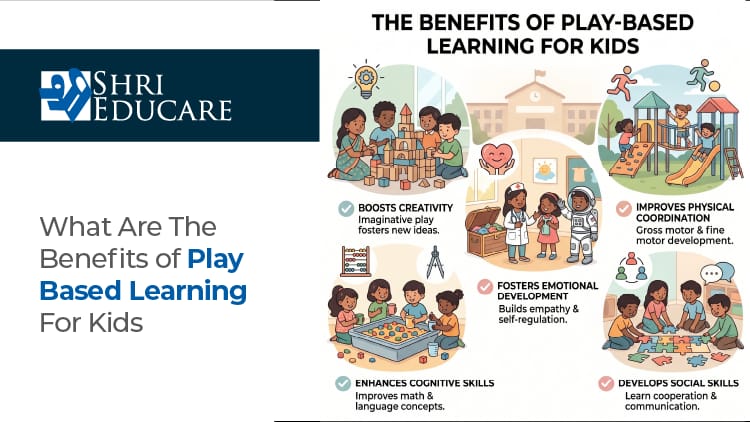
Play based learning is a simple and natural way of teaching young children. It allows children to learn while they play. This method focuses on real experiences instead of only books and memorising. The Benefits of Play Based Learning are wide and important for early child growth. It supports learning in a way that matches how children think and behave at a young age.
Children do not learn the same way as adults. They need movement, fun and real actions. Play gives them this space. It helps them stay active and interested. It also reduces stress and pressure. This method is now used in many modern schools because it supports full development. It builds strong early habits for learning.
Benefits of Play Based Learning for Children
Makes Learning Easy and Natural
Children learn better when they feel relaxed and interested. Play creates a comfortable space for learning. It removes pressure and fear.
The Benefits of Play Based Learning include better focus and understanding. Children stay active during learning. They do not feel forced. This helps them learn faster and remember things for a longer time.
Some simple ways this happens:
- Children learn while doing activities
- They repeat tasks without feeling bored
- They enjoy the process of learning
- They stay more involved in class
This method helps children build a strong interest in learning from the start.
Improves Social Skills
Play often includes group activities. Children interact with others while playing. They learn how to talk, listen and respond.
One of the key Benefits of Play Based Learning is the development of social skills. Children learn sharing, teamwork and respect. These skills are important for school and daily life.
Children also learn:
- How to wait for their turn
- How to solve small conflicts
- How to work in a team
- How to express their thoughts clearly
These basic skills help children adjust better in school and social environments.
Supports Emotional Development
Children express feelings during play. They show happiness, anger and excitement. This helps them understand emotions.
The Benefits of Play Based Learning include emotional control and stability. Children learn how to handle small problems. They also become more confident in expressing themselves.
Emotional growth through play includes:
- Understanding their own feelings
- Accepting small failures
- Learning patience
- Building self control
This helps children stay calm and balanced in different situations.
Develops Creativity and Imagination
Play gives children freedom to think. They can create stories, roles and ideas.
The Benefits of Play Based Learning include improved imagination. Children think in different ways. This supports creative thinking and problem solving in the future.
Creative play helps in:
- Making new ideas
- Thinking beyond limits
- Creating stories and roles
- Using simple things in new ways
This type of thinking supports innovation and flexible learning later in life.
Builds Thinking and Problem Solving Skills
Many play activities involve challenges. Children solve problems while playing games or building things.
The Benefits of Play Based Learning include better thinking ability. Children learn how to make decisions. They also understand cause and effect in a simple way.
This helps children to:
- Analyse situations
- Try different solutions
- Learn from mistakes
- Improve decision making
These skills are useful in both studies and daily life situations.
Supports Physical Growth
Physical activities are a part of play. Running, jumping and moving help body development.
The Benefits of Play Based Learning include strong motor skills. Children improve balance and coordination. This supports overall physical health.
Physical development includes:
- Better body movement
- Strong muscles and bones
- Improved hand and eye coordination
- Active and healthy lifestyle
This is very important in early childhood, especially in today’s low activity routines.
Builds Confidence and Independence
Play allows children to make their own choices. They decide how to play and what to do.
The Benefits of Play Based Learning include higher confidence. Children feel proud when they complete tasks. They also become more independent in their actions.
Confidence building happens through:
- Completing simple tasks
- Making their own decisions
- Learning from mistakes
- Taking small risks
This helps children become strong and self dependent over time.
Encourages Curiosity
Children are naturally curious. Play gives them chances to explore and ask questions.
The Benefits of Play Based Learning include increased curiosity. Children try new things. They develop interest in learning without pressure.
Curiosity grows when children:
- Explore new ideas
- Ask questions freely
- Try different activities
- Learn through experience
This creates a strong habit of learning and discovery.
Supports Early Academic Learning
Play can include numbers, words and simple tasks. These activities support early education.
The Benefits of Play Based Learning include better basic skills. Children improve in counting, reading and understanding concepts. They learn these skills in a simple and enjoyable way.
Academic support through play includes:
- Learning numbers through games
- Understanding words through stories
- Recognising shapes and patterns
- Improving memory and focus
This builds a strong base for formal education.
Strong Foundation for Future Learning
All skills developed through play help in long term growth. Children become ready for formal education.
The Benefits of Play Based Learning build a strong base for future learning. It supports mental, social and emotional development together.
For those planning a Play School Franchise this approach is useful for building a strong early education system. It helps create a balanced learning model that supports every aspect of child development.
Conclusion
Play based learning is an effective method for early childhood education. The Benefits of Play Based Learning support complete development in children. It improves thinking, behaviour and learning ability.
This method is now widely used in modern education systems. It is also becoming important in every School Franchise in India that focuses on quality education.
A structured approach to play based learning is strongly supported by Shri Educare Limited, as it helps build a strong foundation for young learners and supports long term success in education.
Frequently Asked Questions
1. What is play based learning?
Play based learning is a method where children learn through play activities. They use games, toys and real actions to understand new things. It is simple and natural for young kids.
2. Why is play based learning important for kids?
Play based learning is important because it helps in overall growth. It improves thinking, social skills and confidence. Children learn better when they enjoy the process.
3. At what age should play based learning start?
Play based learning can start at a very early age. It is most useful for toddlers and preschool children. Early years are the best time for this type of learning.
4. Does play based learning help in studies?
Yes, it helps in studies. Children learn basic skills like numbers, words and problem solving through play. It builds a strong base for future learning.
5. Is play based learning better than traditional learning?
Play based learning is very helpful in early years. It makes learning easy and stress free. Traditional learning can be added later when children are ready for structured studies.