


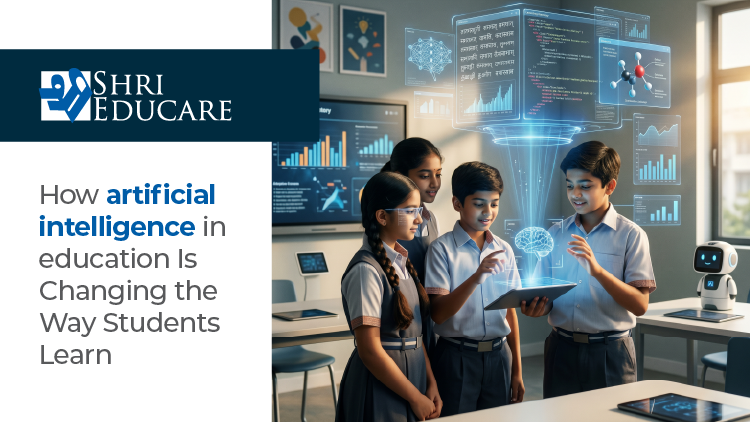
Learning has changed a lot over the years. Earlier, students mostly learned from textbooks, blackboards, and classroom notes. Today, they still need teachers, books, and discipline, but they also have new tools that make learning more personal and active. This is where artificial intelligence in education is making a big difference.
AI is not here to replace teachers. That is a common fear, but it is not the real picture. AI is more like a smart support system. It helps teachers understand students better, gives learners faster help, and makes classroom learning more flexible. When used in the right way, it can make education more useful, simple, and connected to real life.
How Artificial Intelligence in Education Is Changing the Way Students Learn
Learning Becomes More Personal
Every student learns differently. Some students understand a topic quickly. Some need more examples. Some learn better through videos, while others prefer reading, activities, or practice questions. In a normal classroom, it can be hard for one teacher to give a different learning path to every child.
At its heart, artificial intelligence in education helps solve this problem. AI-based learning tools can understand how a student is performing. If a child is weak in fractions, the tool can give more practice in that area. If another child is already strong, the tool can move them to harder questions.
This does not mean the teacher’s role becomes less important. In fact, it gives teachers more useful information. They can see where students are struggling and support them at the right time.
Faster Feedback Helps Students Improve
Feedback is very important in learning. When students know what they did wrong, they can correct it. But if feedback comes too late, the learning gap may become bigger. Many students lose interest when they do not understand their mistakes.
With artificial intelligence in education, feedback can become faster. AI tools can check quizzes, suggest corrections, and show students where they need to improve. For example, if a student answers a maths question incorrectly, the tool can show the steps again. If a student writes a weak sentence, the tool can suggest a better way to write it.
This quick support keeps students moving. They do not have to wait for the next class or the next test to know where they stand. It is like having a small helper beside them while they learn.
Teachers Get Better Support
Teachers do much more than teach chapters. They plan lessons, check assignments, handle records, guide students, talk to parents, and manage classroom needs. It is a lot of work, and sometimes it can take away time from actual teaching.
One strong change brought by artificial intelligence in education is that teachers can save time on repeated tasks. AI tools can help with lesson planning, student reports, quiz creation, and learning analysis. This gives teachers more time to focus on children, discussions, doubts, and classroom bonding.
A teacher will always bring care, patience, and human understanding. AI cannot replace that. But it can reduce some extra load and make teaching more focused.
Students Can Learn at Their Own Speed
Not every child feels comfortable asking questions in class. Some students are shy. Some fear that others may laugh. Some need to hear the same idea many times before they understand it fully.
Another useful part of artificial intelligence in education is that it allows students to learn at their own pace. A student can repeat a lesson, pause a video, take extra practice, or revise a topic without feeling judged. This builds confidence slowly.
For many children, this can be a big relief. They get space to learn without pressure. And once they feel safe, they often become more active in the classroom too.
Learning Becomes More Engaging
Let us be honest. Some lessons can feel boring when they are taught only through long notes. Students today are growing up in a world full of screens, visuals, games, and quick information. Schools cannot ignore this change.
AI can make learning more interactive through smart games, virtual activities, voice tools, practice apps, and visual examples. A science lesson can become more exciting with simulations. A language lesson can become better with speaking practice. A history topic can become more alive through digital storytelling.
Still, artificial intelligence in education should be used with balance. Technology should not become a distraction. It should support learning, not take over the child’s attention. The goal is not more screen time. The goal is better learning time.
Better Understanding of Student Progress
Marks show one part of a student’s performance. But they do not always show the full picture. A child may score less because of fear, confusion, lack of practice, or weak basics. Another child may score well but still need help in thinking skills or creativity.
AI tools can help schools study learning patterns more deeply. They can show which topics are difficult for most students, which children need extra support, and which teaching methods are working better. This makes school planning more thoughtful.
For schools, artificial intelligence in education can bring better decision-making. It helps leaders and teachers move from guesswork to clearer understanding. When schools know the real learning gaps, they can take better action.
Preparing Students for the Future
The world outside school is changing fast. Many careers now use technology, data, automation, and digital tools. Students do not need to become computer experts in every field, but they should understand how technology works around them.
AI-based learning helps students build curiosity, problem-solving skills, and digital confidence. It can also teach them to ask better questions. This is very important because the future will not only reward students who remember answers. It will reward students who can think, adapt, and learn again and again.
At the same time, schools must teach responsible use of AI. Students should know that AI can help, but it should not do all the thinking for them. They must learn honesty, effort, originality, and common sense. A smart tool is useful only when the user is also thoughtful.
Human Connection Still Matters Most
Even with all these changes, education remains deeply human. A child still needs a teacher’s smile, guidance, care, and encouragement. A student still needs friendship, teamwork, values, discipline, and emotional support.
AI can give answers, but it cannot understand a child’s heart like a good teacher can. It can suggest a path, but it cannot replace the warmth of a classroom. So, schools should not look at AI as a complete solution. They should look at it as one helpful part of a bigger learning system.
The best model is simple. Let technology handle support tasks. Let teachers handle human growth.
Conclusion
When used wisely, artificial intelligence in education can make learning more personal, more flexible, and more helpful for every student. It can support teachers, improve feedback, reduce learning gaps, and prepare children for a changing world. But schools must use it with care, balance, and purpose. The real importance of AI is not just in smart tools, but in how these tools improve learning for children. Shri Educare supports this future-ready approach by helping schools build strong, thoughtful, and student-focused learning environments.