


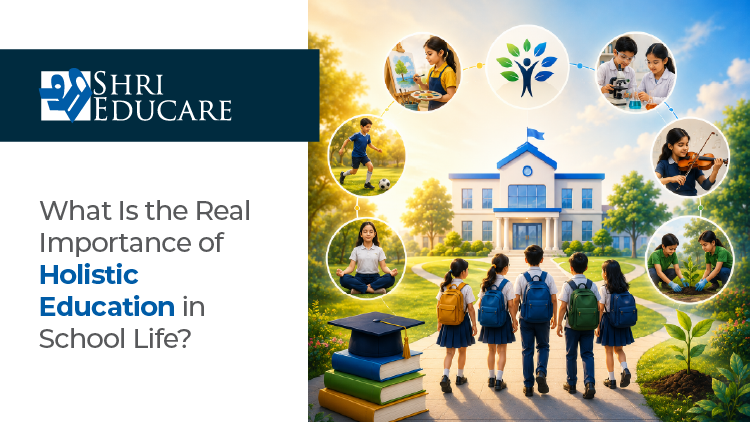
School life is not only about books, marks, exams and report cards. Of course, studies matter. Every child needs strong reading, writing, number and thinking skills. But a child is more than a student sitting in a classroom. A child has emotions, dreams, habits, talents, fears, ideas and a personality that is still growing. This is where the importance of holistic education becomes very clear.
Holistic education looks at the complete growth of a child. It supports the mind, body, emotions, social skills, values, creativity and confidence. It helps children learn how to think, behave, express, solve problems and live with others. In simple words, it prepares children not just for exams but for life.
What Does Holistic Education Mean?
Holistic education means teaching children in a balanced way. It does not focus only on textbook learning. It also gives importance to sports, arts, communication, emotional health, teamwork, discipline, kindness, leadership and real life understanding.
The importance of holistic education is seen when children start becoming more aware of themselves and the world around them. They learn how to ask questions, share opinions, listen to others and make better choices. They also understand that learning is not limited to one subject or one classroom.
For example, a science project can teach research. A group activity can teach teamwork. A school play can build confidence. A sports match can teach patience and fair play. These small experiences slowly shape a child’s character.
The Importance of Holistic Education in Every Student’s School Life
It Builds Confidence in Children
Many children are bright but they may feel shy or scared to speak. Some may be good at studies but unsure about joining group tasks. Some may have creative ideas but may not know how to express them.
The importance of holistic education lies in giving every child space to grow at their own pace. When students take part in debates, music, art, storytelling, sports, drama and class discussions they become more confident. They learn that their voice matters.
Confidence does not come in one day. It grows when children feel supported. A healthy school environment helps them try, fail, learn and try again without fear.
It Supports Emotional Growth
Children also feel stress, sadness, anger, pressure and confusion. Sometimes adults think school children have no real worries but that is not true. They may worry about marks, friendships, comparison, family expectations or fitting in.
This is why the importance of holistic education is not just academic. It helps children understand emotions in a better way. They learn how to manage disappointment, handle mistakes, respect others and speak when they need help.
A child who understands emotions can build better relationships. They become calmer, kinder and more balanced. This emotional strength helps them not only in school but also later in life.
It Encourages Better Social Skills
School is one of the first places where children learn how to live with others. They meet classmates from different homes, habits, cultures and thinking styles. They learn to share, wait, help, lead, follow and adjust.
The importance of holistic education can be seen in how it improves social behaviour. Group projects, classroom activities, sports teams, field trips and cultural events help students interact naturally. They learn that everyone is different and that difference should be respected.
Good social skills make children more comfortable in public spaces. They learn how to talk politely, solve small conflicts and work with people.
It Makes Learning More Interesting
When learning is only about memorising answers, students may lose interest. But when lessons include activities, stories, experiments, role play, projects and outdoor learning, education becomes more meaningful.
The importance of holistic education is that it makes learning feel alive. Children do not just read about plants; they may grow one. They do not just learn about teamwork; they practise it in a game. They do not just hear about kindness; they show it through action.
This kind of learning stays longer in the mind because children experience it, not just repeat it.
It Helps Children Discover Their Talents
Every child is not the same. One may be good at numbers. Another may love painting. Someone may enjoy sports, while another may be a natural speaker. Some children may take time to find what they like and that is completely fine.
The importance of holistic education is that it gives children many chances to discover their strengths. When schools offer music, dance, sports, clubs, art, reading, coding, gardening, public speaking and other activities, students get room to explore.
This does not mean every child must become an artist, athlete or leader. It simply means every child should get the chance to know themselves better.
It Teaches Values and Responsibility
Good education should also build good human beings. Marks may open doors but values help children walk through those doors with grace. Respect, honesty, patience, empathy, discipline and responsibility are important parts of life.
The importance of holistic education becomes strong here. It teaches students to care about more than personal success. They learn to respect teachers, support friends, care for the environment and understand their role in society.
Small habits like keeping the classroom clean, helping a classmate, finishing work on time or speaking truthfully build responsibility over time.
It Prepares Students for the Future
The world is changing fast. Children today need more than textbook knowledge. They need problem solving skills, communication skills, creativity, emotional balance, teamwork and confidence. These are the skills that help them face real situations.
The importance of holistic education is that it prepares students for this changing world. It helps them become flexible thinkers. They learn how to adapt, make decisions and stay curious.
A student who learns only answers may struggle when life asks new questions. But a student who learns how to think can handle challenges better.
Role of Teachers and Schools
Teachers play a big role in holistic education. A good teacher does not only complete the syllabus. They observe students, understand their needs, encourage their ideas and guide them with patience.
Schools also need to create a safe and positive space. Children should feel free to ask, speak, play, create and learn. Classrooms should not feel like pressure zones. They should feel like places where growth happens every day.
The importance of holistic education is fully seen when teachers, parents and schools work together. When the child receives support from all sides, growth becomes more natural and strong.
Conclusion
Holistic education gives children a better and richer school life. It helps them grow in studies, emotions, health, creativity, confidence, values and social behaviour.
It makes learning more joyful and prepares students for real life, not only exams.
The focus remains on meaningful learning and Fostering Holistic Development with Shri Educare so every child can grow with balance, purpose and confidence.
It also helps students understand themselves better, respect others, handle small challenges and build habits that stay with them for years.
When children learn in this balanced way, school becomes a place where they feel seen, supported and ready for the future.