


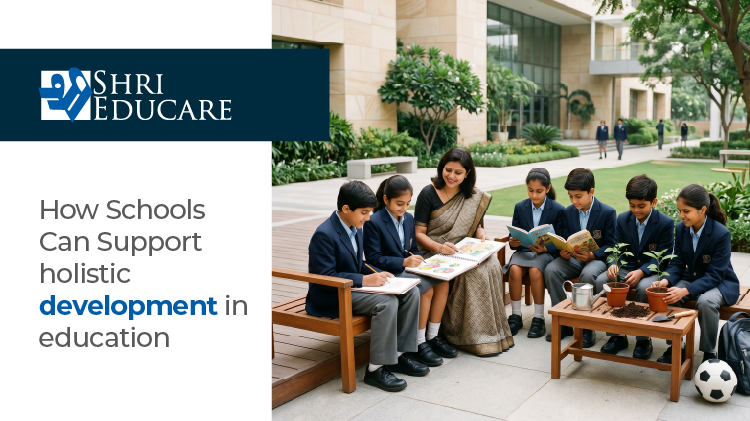
Education is not only about books, marks, exams and report cards. A child is not a machine that only needs information. A child also needs confidence, kindness, courage, discipline, creativity, health and the ability to think clearly. This is where holistic development in education becomes very important.
A good school helps children grow in many ways. It builds the mind but it also supports the heart, body, values, habits and social skills. When this happens, students do not just become good learners. They become better human beings too.
Understanding the Real Meaning of Holistic Growth
Many people think school success means high marks. Of course, marks matter. They show progress in learning. But they are not the whole picture. A child may score well but still feel nervous, confused, lonely or afraid to speak. Another child may be creative and thoughtful but may need support in academics.
That is why holistic development in education looks at the full child. It asks simple but deep questions. Is the child emotionally strong? Can the child work with others? Can the child solve problems? Does the child know how to express feelings? Is the child curious? Is the child healthy and active?
When schools focus on these questions, learning becomes more meaningful. Children feel seen, not just tested.
The Role of Schools in Supporting Holistic Development in Education
Building Strong Academic Foundations
Academic learning is still the base of school life. Reading, writing, maths, science, languages and general knowledge help children understand the world. But the way these subjects are taught matters a lot.
Schools can make learning more useful by connecting lessons with real life. For example, maths can be taught through shopping, budgeting or measuring objects. Science can be connected with plants, weather, food and daily habits. Language learning can include stories, speaking activities and small writing tasks.
This kind of learning makes students more active. They do not just memorise. They understand. And once a child understands something clearly, confidence starts growing naturally.
Giving Space for Creativity
Creativity is not only about painting or music. It is about thinking in fresh ways. It is about asking, “Can this be done differently?” Children need space to imagine, try, fail and try again.
Schools can support holistic development in education by giving enough time for art, music, dance theatre, storytelling, craft and design based activities. These activities help children express thoughts that they may not say in normal classroom discussions.
Some children speak through colours. Some speak through movement. Some speak through stories. A school that values creativity gives every child a way to shine.
Helping Children Manage Emotions
Children also carry stress, fear, anger, sadness and pressure. Sometimes they do not know how to explain these feelings. They may become quiet, restless, rude or distracted. Instead of only correcting behaviour, schools should try to understand what is behind it.
Teachers can help by creating a safe classroom environment. Simple things work well. A kind tone, patient listening, calm rules and regular check ins can make a big difference. Children should feel that asking for help is normal.
Emotional strength does not come in one day. It grows slowly, like a plant. Schools that support feelings help students become more balanced and self aware.
Encouraging Physical Health and Movement
A healthy body supports a healthy mind. Children need movement, games, sports, yoga, outdoor play and simple fitness habits. Sitting for long hours can make learning dull and tiring.
Physical education should not be treated like a break from “real studies.” It is part of real education. Sports teach teamwork, discipline, patience and fair play. They also help children handle winning and losing with grace.
This is another important part of holistic development in education because children learn through their bodies too. A child who runs, plays, stretches and moves often feels more alert and happy.
Teaching Values Through Daily Actions
Values cannot be taught only through moral science chapters. Children learn values by watching adults. They notice how teachers speak, how classmates are treated and how mistakes are handled.
Schools can teach honesty, respect, kindness, responsibility and empathy through daily routines. For example, students can take turns helping in class, caring for plants, keeping spaces clean or supporting younger children.
Small actions build strong values. Over time, children understand that good behaviour is not just about rules. It is about respect for self and others.
Creating Strong Teacher Student Relationships
A teacher can change the way a child sees learning. When a teacher believes in a student the student often starts believing in themselves too. This does not always need big speeches. Sometimes, a simple “You can do better and I am here to help” is enough.
For holistic development in education, teachers need to know students beyond marks. They should notice interests, fears, learning styles and personal strengths. Some children learn fast through visuals. Some need more examples. Some need encouragement before they speak.
When teachers understand these differences, classrooms become more inclusive and warm.
Involving Parents in the Journey
Schools and parents should work like partners. A child spends time in both places, so both sides must support the same growth. If school teaches discipline but home gives no routine the child may feel confused. If home values marks only and school values overall growth, again there may be pressure.
Parent meetings should not only discuss marks. They should also talk about behaviour, friendships, interests, confidence, habits and emotional well being. This makes the child’s growth clearer.
Parents can also support holistic development in education by allowing children to help at home, read books, play outside, ask questions and make small decisions.
Making Classrooms More Inclusive
Every child is different. Some children are loud. Some are quiet. Some learn quickly. Some need more time. Some are strong in sports, while others are strong in art, logic, language or leadership.
A good school does not force every child into the same box. It gives different chances to grow. Group work, projects, discussions, peer learning, presentations and hands on tasks can help different learners take part.
This approach supports holistic development in education because it respects the child as a whole person, not just as a student sitting in a classroom.
Preparing Students for Real Life
Life after school is not only about exams. Students will need communication skills, decision making, problem solving, time management, teamwork and emotional balance. They will face success, failure, pressure, choices and change.
Schools can prepare them through simple real life activities. Students can work on projects, speak in front of others, manage small events, solve local problems or take part in community work. These experiences teach lessons that books alone cannot teach.
This is why holistic development in education is not a fancy idea. It is a practical need. It helps children become ready for life, not just the next test.
Conclusion
Schools play a powerful role in shaping a child’s future. When they focus on academics, creativity, health, emotions, values and life skills together, learning becomes deeper and more useful. The aim is not to make every child the same. The aim is to help every child grow with confidence, care and purpose. With the right mix of thoughtful teaching, social emotional learning, parent support and strong school systems, holistic development in education can become a real part of everyday school life. Shri Educare supports this vision by helping schools create learning spaces where children can grow as complete, confident and responsible individuals.