


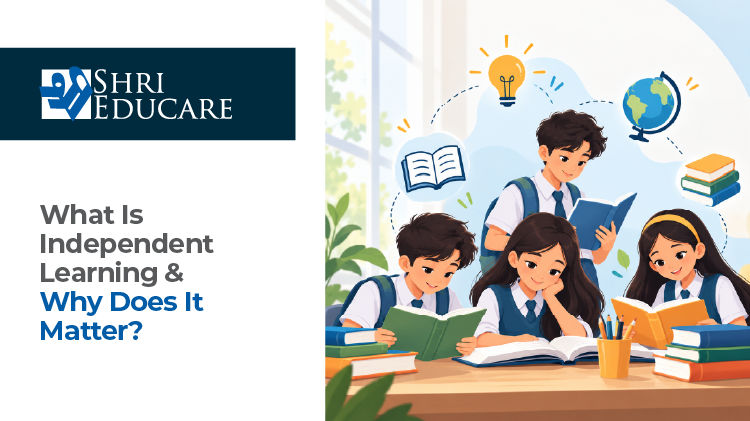
Learning does not always have to begin with a teacher saying what to do. Sometimes, students learn better when they take charge of their own work, ask questions and find answers for themselves. This is where the importance of independent learning becomes clear.
Simple independent learning strategies can help students become more responsible, curious and confident. It does not mean learning completely alone. It simply means taking a more active role instead of waiting for someone else to guide every step.
What Is Independent Learning?
Independent learning means students take more responsibility for how they learn.
They may decide what they need to practise, plan their study time, find useful resources or check their own progress. Teachers are still there to support them but students slowly learn how to manage more things themselves.
The importance of independent learning is that it prepares students to think for themselves.
Good independent learning strategies also teach them how to deal with a problem before immediately asking someone else for the answer.
How Independent Learning Helps Students Grow
It Helps Students Become More Responsible
Imagine having homework due on Friday.
A student can wait until Thursday night or they can divide the work across several days. Independent learners are more likely to understand that their choices affect the final result.
This is part of the importance of independent learning. Students start taking ownership of their work rather than depending completely on reminders from parents or teachers.
Over time, small habits like this can make school life feel much more organised.
Students Learn to Set Their Own Goals
A goal gives students something clear to work towards.
It does not have to be huge. A student might decide to learn ten new words this week or practise maths for twenty minutes every evening.
Setting small goals is one of the easiest independent learning strategies because students can clearly see whether they are making progress.
Once one goal is completed they can move to the next. Step by step, studying starts to feel more manageable.
It Builds Confidence
There is a different kind of confidence that comes from solving something on your own.
Maybe a student finally understands a difficult maths question. Perhaps they finish a project without constant reminders. These moments matter.
The importance of independent learning can be seen when students start trusting their own ability to learn.
They may still ask for help when they need it but they are less likely to give up the moment something becomes difficult.
Asking Questions Is Part of Independent Learning
Independent learners are not silent learners.
In fact, asking good questions is one of the most useful independent learning strategies.
Students might ask themselves, “Why does this happen?” or “Can I explain this in my own words?” Sometimes they may need to ask a teacher too.
The difference is that they think about the problem first.
This habit can turn learning from simply remembering information into actually understanding it.
It Encourages Better Time Management
School brings homework, tests, projects, activities and sometimes a pretty busy timetable.
Students who learn to plan their time usually find it easier to handle these responsibilities.
The importance of independent learning becomes especially clear as students move into higher classes and their workload grows.
Instead of studying everything at the last minute they learn to decide what needs attention first.
That skill can be useful far beyond school too.
Break Big Tasks Into Smaller Steps
A long chapter or big project can look scary at first.
Breaking it into smaller parts makes it easier.
Useful independent learning strategies may include:
- Dividing a chapter into short sections.
- Setting one small target for each study session.
- Keeping a simple study timetable.
- Taking short breaks between difficult tasks.
- Checking completed work before moving ahead.
These habits make large tasks feel less stressful and help students stay focused.
Students Become Better Problem Solvers
Independent learning encourages students to try different ways of solving a problem.
If the first method does not work they can try another one.
This ability to keep thinking is a big part of the importance of independent learning. Real life does not always give people step by step instructions.
Learning how to pause, think and try again can help students become more patient and flexible.
Use Different Learning Resources
Sometimes one textbook explanation simply does not click.
That is okay.
Students can use notes, diagrams, educational videos, practice questions, dictionaries or other trusted learning resources.
Using different resources is one of the most practical independent learning strategies because students begin finding the learning method that works best for them.
Some understand better through reading. Others may prefer visual examples or practice exercises.
Learning From Mistakes Matters
Getting something wrong is not the end of learning.
Actually, mistakes can show students exactly what they need to work on.
This explains another part of the importance of independent learning. Instead of feeling upset about every wrong answer, students can ask why the mistake happened.
Was the question misunderstood? Was a rule forgotten? Was the work rushed?
Once the reason becomes clear, improvement becomes easier.
Review Your Own Progress
Students should sometimes stop and ask, “Am I actually improving?”
This kind of self check is one of the strongest independent learning strategies.
They can look at old work, repeat a practice test or explain a topic without looking at their notes.
If something still feels difficult they know where to focus next.
There is no need to get everything right immediately. Progress matters more than perfection.
Independent Learning Does Not Mean Learning Alone
This point is important.
Being independent does not mean refusing help.
Students still need teachers, parents, classmates, books and other learning resources. The difference is that they take responsibility for using that support wisely.
The importance of independent learning is about becoming an active learner, not an isolated one.
Knowing when to ask for help is actually part of being independent.
Create a Simple Study Routine
A routine can make independent study much easier.
Students do not need a complicated timetable. A regular place and time for study can be enough.
Some useful independent learning strategies include keeping distractions away, preparing books before starting, setting one clear target and reviewing the work at the end.
A simple routine also reduces the time spent deciding what to do next.
Curiosity Makes Independent Learning Easier
Students often learn faster when they are genuinely interested in something.
A lesson about space might lead to questions about planets. A history chapter might make someone curious about an old city. That curiosity can lead to deeper learning.
This is another reason the importance of independent learning goes beyond marks.
Students begin exploring ideas because they want to know more, not only because an exam is coming.
Start Small and Build the Habit
Nobody becomes an independent learner overnight.
Start with one small change. Plan tomorrow’s homework without being reminded. Read a little about a topic before the next class. Try solving one difficult question before asking for help.
These small independent learning strategies become stronger with regular practice.
The aim is not to remove guidance. It is to help students slowly become confident enough to guide more of their own learning.
Conclusion
Independent learning helps students become responsible, confident, curious and better prepared to solve problems. The importance of independent learning can be seen in the way students begin planning their work, checking their progress, learning from mistakes and taking ownership of their education.
Using simple independent learning strategies regularly can make this process easier. Alongside approaches such as Social Emotional Learning for Students, independent learning can support both academic growth and personal development.
Shri Educare encourages learning approaches that help students think independently, take responsibility for their progress and develop habits that can support them throughout school and beyond.