


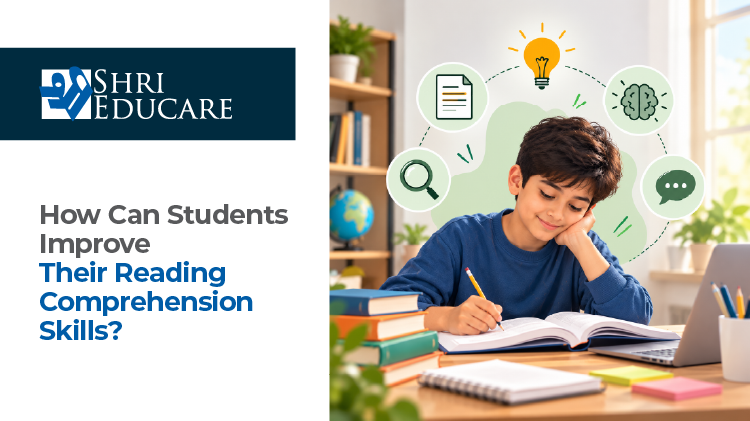
Reading is not only about saying the words on a page. The real goal is to understand what the writer is trying to say. Good reading comprehension strategies can help students understand lessons, stories, questions and exam passages more clearly.
Students who want to improve reading skills do not need to rush through long books. Small habits can make a big difference.
The key is to read with attention, ask questions and think about the meaning instead of simply finishing the page.
Simple Ways Students Can Improve Reading Comprehension
Start by Reading Slowly
Many students read too fast because they want to finish quickly. The problem is that speed can sometimes reduce understanding.
One of the easiest reading comprehension strategies is to slow down. Read a paragraph, stop for a moment and ask yourself what it meant.
If you want to improve reading skills, focus first on understanding. Speed can come later.
Ask Questions While You Read
Good readers often ask questions in their minds.
Who is speaking? Why did this happen? What is the main idea? What may happen next?
These simple questions keep your mind active.
Using questions as part of your reading comprehension strategies can make even a difficult chapter easier to follow. It also helps students improve reading skills because they begin to notice important details instead of treating every line in the same way.
Find the Main Idea
Every paragraph usually has one main point.
Try to find that point before moving ahead. Sometimes it appears in the first sentence. At other times you may need to read the whole paragraph.
This is one of the most useful reading comprehension strategies for school subjects because textbooks often contain a lot of information.
Students who regularly look for the main idea can improve reading skills and remember lessons more easily.
Learn New Words in Context
A difficult word can stop the flow of reading.
Instead of giving up, look at the words around it first. The sentence may give you a clue about its meaning. If that does not help, check a dictionary and then read the sentence again.
Building vocabulary makes future reading easier. It also helps students improve reading skills across subjects, not only in English.
Make Short Notes
You do not need to write a full summary after every page.
A few short notes are enough:
- Write the main idea of the section.
- Note one or two important facts.
- Mark any word you did not understand.
- Write down a question you still have.
This habit can make reading comprehension strategies more practical because students are actively thinking about what they read.
Use Your Own Words
After reading a section, close the book and explain it in your own words.
If you can explain it simply you probably understood it well.
This is a great way to improve reading skills because it shows whether you really understood the idea or only remembered a few lines.
It also stops students from depending too much on the exact words used in the textbook.
Connect the Topic With Real Life
Reading becomes easier when a topic feels familiar.
If you are reading about pollution, think about traffic or waste around you. If you are reading a story about friendship, connect it with something you have seen in real life.
Making these connections is one of the easiest reading comprehension strategies for remembering information.
Read Different Kinds of Content
Do not read only textbooks.
Try short stories, biographies, simple news articles, comics or non fiction books. Different kinds of reading expose students to new ideas and writing styles.
Students who want to improve reading skills should explore different types of content because it helps them become comfortable with new words and sentence patterns.
Highlight Only What Matters
Some students highlight almost every line in a chapter. That usually does not help much.
Highlight only key words, important facts or sentences that explain the main idea. This helps the important information stand out when you revise later.
A little highlighting can be useful. Too much simply makes the page look colourful.
Read the Questions Before the Passage
This can be useful during tests.
If a comprehension passage comes with questions, read the questions first. You will have a clearer idea of what information to look for while reading.
This simple habit can also save time and reduce confusion during exams.
Discuss What You Read
Talking about a chapter with a teacher, parent or friend can improve understanding.
Someone else may notice an idea you missed or explain a difficult part in a simpler way.
Discussion is one of those reading comprehension strategies that feels less like studying and more like a normal conversation.
Explaining ideas aloud can also help students remember them better.
Practise a Little Every Day
Reading comprehension gets better with practice.
You do not need to read for hours. Even a short period of focused reading every day can help.
Students who want to improve reading skills should choose a routine they can actually follow. A small daily habit usually works better than reading a lot once and then stopping for several days.
Do Not Be Afraid to Read Again
Sometimes one reading is not enough.
That is completely normal.
If a paragraph feels confusing, read it again slowly. Break long sentences into smaller parts and look at them one by one.
Re reading is one of the most useful reading comprehension strategies because difficult ideas often become clearer the second time.
Students can improve reading skills faster when they stop seeing re reading as a problem.
Keep Reading Enjoyable
Not every reading session has to feel like homework.
Choose topics you enjoy sometimes. If you like sports, read about athletes. If science interests you, try simple science articles. If stories are your thing, pick short fiction.
Enjoyment makes it easier to practise regularly and regular reading naturally builds confidence.
Conclusion
Reading comprehension grows step by step. Students can understand more by slowing down, asking questions, finding the main idea, learning new words, making short notes and discussing what they read.
Using simple reading comprehension strategies regularly can make schoolwork easier and help students become more confident readers. Strong reading also supports wider skills development because students learn to think, explain, connect ideas and understand information better.
Shri Educare supports learning approaches that help students improve reading skills, build strong academic habits, understand ideas clearly and become more independent learners.