


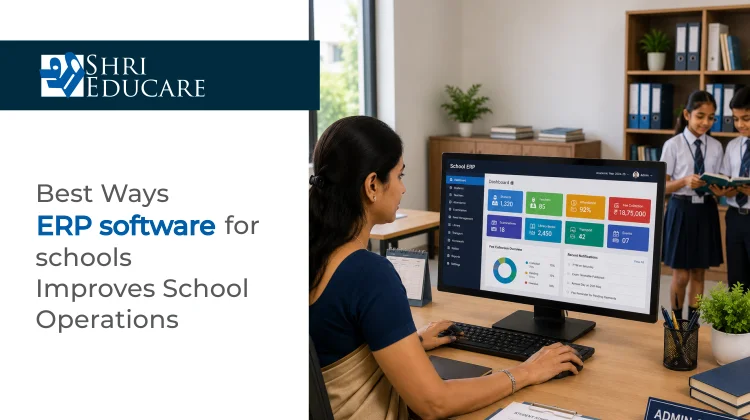
Running a school is not an easy job. Every day, many things happen at the same time. Teachers handle classes. Admin teams manage fees and records. Parents ask for updates. Students need support, safety and proper learning.
When all this work is done manually, it can become slow and confusing. Papers get misplaced. Messages get delayed. Reports take time. This is where ERP software for schools can help in a very practical way.
It brings many school tasks into one digital system. This makes daily work faster, cleaner and easier for everyone.
What Is a School ERP System?
A school ERP system is a digital platform that helps schools manage different tasks from one place.
It can support:
- Student attendance
- Fee management
- Admission records
- Exam results
- Timetables
- Parent communication
- Staff records
- Transport details
- Reports and data
Explaining it in simple terms, ERP software for schools works like a smart control room for school operations. It keeps things organized and reduces daily pressure on the school team.
Best Ways ERP software for schools Helps Schools Work Smarter
1. It Saves Time in Daily Work
Schools have many small tasks that take a lot of time. Taking attendance, checking fee records, updating student details and preparing reports may look simple but they can eat up many hours.
A school ERP system reduces this extra work.
Teachers can mark attendance quickly. Admin staff can find records in seconds. Management can check reports without asking different departments again and again.
This helps the whole school work in a smoother way.
Instead of spending time on files and registers the team can focus on better student care and school improvement.
2. It Makes Parent Communication Easier
Parents want regular updates about their child. They want to know about attendance, homework, exams, fees, activities and school notices.
Manual communication can be slow. Sometimes a notice does not reach home. Sometimes calls are missed. Sometimes parents have to contact the school many times for one small update.
ERP software for schools makes communication simple.
Schools can send updates through the system. Parents can check important information on time. This helps them stay connected with their child’s school life.
It also reduces pressure on the school office because fewer parents need to call for basic details.
3. It Helps Teachers Work Better
Teachers already handle many responsibilities. They teach lessons, check notebooks, prepare tests, guide students and speak with parents.
When teachers also have to manage too much paperwork, it becomes tiring.
A school ERP system helps teachers by reducing repeated manual tasks.
Teachers can:
- Mark attendance online
- Upload homework
- Enter marks
- Share notes
- Track student progress
- View performance records
This does not replace teachers. It supports them.
When teachers save time on paperwork they can give more attention to teaching and helping students.
4. It Improves Fee Management
Fee management is one of the most important parts of school operations. But it can also become stressful if it is handled manually.
There may be confusion about paid fees, pending fees, receipts, late payments and reminders.
ERP software for schools makes this process clearer.
The admin team can track payments easily. Parents can receive fee updates and reminders. Receipts can be generated faster. Pending amounts can be checked without going through long records.
This creates more transparency between the school and parents.
It also reduces mistakes in fee records, which is a big relief for the accounts team.
5. It Makes Admission Work Smoother
Admission season can be very busy for schools. There are enquiries, calls, forms, documents, follow ups and parent meetings.
If the process is not organized, schools may miss good leads or delay responses.
A school ERP system helps manage admission work in a better way.
It stores enquiry details, student information, document status and follow up notes in one place. The admission team can see which parent has been contacted and what step is pending.
This makes the full process more professional.
Parents also feel more confident when the school handles admission in a clear and smooth way.
6. It Keeps Student Data Organized
Schools manage a lot of student data. This includes personal details, academic records, attendance, fee history, medical details and parent contact information.
If this data is kept only in paper files, it becomes hard to manage.
ERP software for schools helps keep student records organized and easy to find.
Here is how it supports data management:
| School Task | Manual Method | ERP Method |
| Attendance | Registers and sheets | Digital records |
| Fee details | Paper receipts | Online tracking |
| Results | Manual mark entry | Faster report cards |
| Parent updates | Calls and notices | Instant updates |
| Student records | Files and folders | One digital profile |
This kind of system makes information easier to use. It also helps school leaders make better decisions.
7. It Makes Exams and Results Easier
Exam work needs careful planning. Schools have to prepare schedules, collect marks, calculate results and make report cards.
Doing all this manually can take a lot of time.
There is also a chance of human error.
A school ERP system can make exam work more accurate and faster. Teachers can enter marks digitally. Reports can be created more easily. Parents can receive results in a proper format.
This makes the exam process smoother for teachers, students, parents and the admin team.
8. It Supports Better Transport Management
School transport needs proper tracking. Parents want to know that their children are safe. Schools need to manage routes, drivers, vehicles and pickup points.
A digital ERP system can help schools keep transport records in order.
It can support:
- Route planning
- Vehicle details
- Driver records
- Student pickup points
- Transport fee details
This improves safety and daily coordination.
Even small improvements in transport management can make a big difference in the school day.
9. It Helps School Leaders Make Better Decisions
School leaders need clear information to make good decisions. They need to understand attendance, student strength, fee status, academic performance and staff workload.
ERP software for schools gives useful reports that help management see what is happening.
Instead of guessing, school leaders can look at real data.
This helps them plan better, solve problems faster and improve school operations step by step.
Conclusion
A school works best when its systems are simple, clear and connected. From attendance and fees to admissions, exams, transport, parent updates and reports, digital support can make daily operations much easier.
ERP software for schools is not just about technology. It is about saving time, reducing confusion and creating a better experience for teachers, parents, students and school management.
Schools can use digital tools to work smarter and grow with confidence with the right planning.
Shri Educare supports institutions in building strong systems that make school management more effective, modern and ready for the future with the best ERP software for educational institutes.